
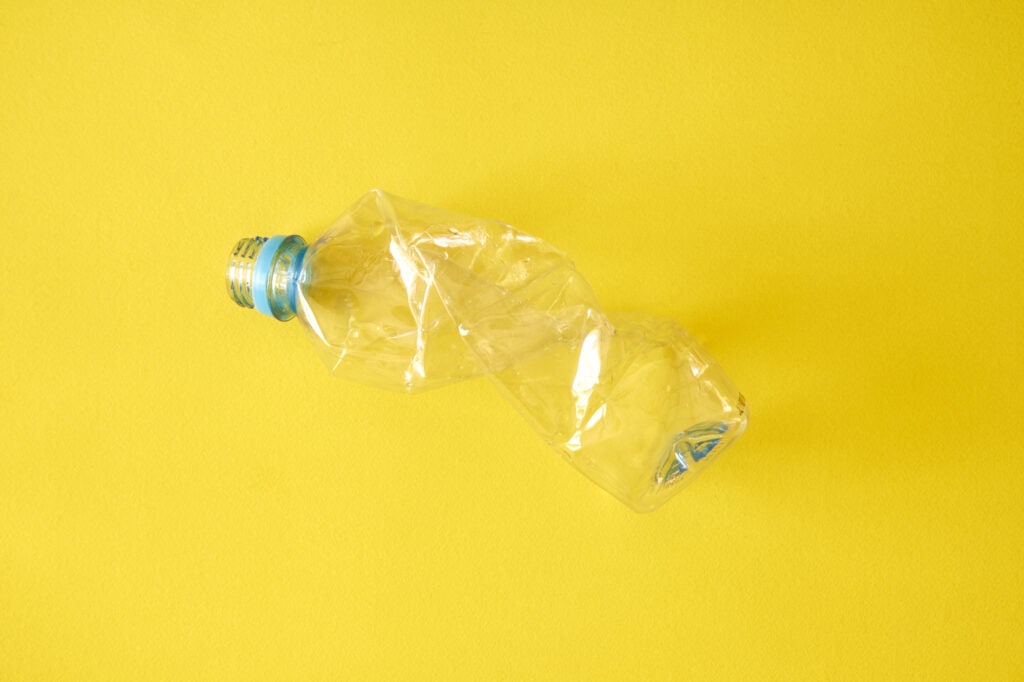
When people don’t trust their tap, single-use bottled water can feel like the fastest fix. But as a long-term “bandage,” it often creates new problems: higher costs, more trash, more shipping weight, more marketing, and growing health questions.
The United Nations Environment Programme (UNEP) reports that approximately 1 million plastic drinking bottles are purchased worldwide every minute. UNEP.org also estimates that 19–23 million tons of plastic waste enter aquatic ecosystems (lakes, rivers, seas) each year. unep.org
Numbers at a glance (real examples you can verify)
These are example prices from a major U.S. retailer and a tap-water cost example from EPA:
24-pack of 16.9 oz bottles: $3.64 Walmart.com
Cost per fl oz: $3.64 ÷ (24×16.9) = $0.00897 per fl oz
Cost per mL: $3.64 ÷ (24×500 mL) = $0.000303 per mL
5-gallon refill (self-service): $1.80 Walmart.com
Cost per fl oz: $1.80 ÷ (5×128) = $0.00281 per fl oz
Cost per mL: $0.0000951 per mL (based on 5 U.S. gallons)
Tap water cost example (EPA WaterSense): $0.00295 per gallon US EPA
Cost per fl oz: $0.0000230 per fl oz
Cost per mL: $0.000000779 per mL
Bottled water is like paying a “convenience tax” in plastic—paid repeatedly.
Reason 1) Bottled water usually costs far more than “fixed” tap water
Even “cheap” cases add up. The EPA’s example tap-water rate is $0.00295 per gallon. US EPA Many families who rely on bottles spend far more each month than they realize—because they’re paying for packaging, shipping, storage, and marketing.
Reason 2) Single-use containers turn water into a packaging and waste problem
Bottled water isn’t just water—it’s a steady stream of bottles, caps, labels, shrink wrap, and cardboard trays. UNEP warns that we’ve become “addicted” to single-use plastic, with major environmental consequences. unep.org
Map/Infographic (see the data):
Our World in Data’s Plastic Pollution explainer and charts Our World in Data
Our World in Data chart: Mismanaged plastic waste (by country) Our World in Data
Reason 3) Microplastics and nanoplastics are showing up in bottled water
In 2024, the NIH summarized research detecting thousands of tiny plastic bits in common single-use bottled water and emphasized that nanoplastics are widespread but remain poorly understood. National Institutes of Health (NIH) Columbia’s public health summary of the same research reported 110,000 to 370,000 particles per liter in tested bottled waters (most were nanoplastics). Mailman School of Public Health
The WHO’s report confirms that microplastics occur in the water cycle, including in tap and bottled drinking water, and highlights key knowledge gaps. World Health Organization+1
Reason 4) “Glass is always safer” isn’t a sure thing
Many people switch to glass to avoid plastic. But the container system includes caps and closures too—and those can matter. (The takeaway: it’s rarely “just the bottle.”)
Reason 5) “BPA-free” liners can still mean “not well-tested”
Aluminum cans and many metal containers typically use thin internal coatings (liners). When companies move away from BPA-based epoxies, they may use BPA substitutes or other chemistries—some with limited long-term human data.
FDA’s current perspective: BPA is safe at the current levels occurring in foods for approved uses. U.S. Food and Drug Administration
EFSA (Europe) set a much lower health-based guidance value in its 2023 re-evaluation (more precautionary stance). European Food Safety Authority+1
National Toxicology Program (NTP) report reviews the biological activity of BPA structural analogues and functional alternatives. National Toxicology Program+1
A major systematic review concluded BPS and BPF can be as hormonally active as BPA in the published literature. PMC
A 2024 critical review summarizes hazards and data gaps for several BPA alternatives prioritized by European regulators. PubMed
Plain-language point: “BPA-free” is not the same as “risk-free”—sometimes it means “different chemicals, different unknowns.”
Reason 6) Bottled water is not a magic shield from contaminants
Bottled water can be treated and tested, but it’s still part of the same real world of industrial processes, pipes, plastics, and quality control limits.
Reason 7) Shipping water is shipping weight (and you pay for it)
Water is heavy. Bottled-water pricing includes fuel, trucking, and handling.
A practical example: a 5-gallon jug is bulky, and it’s heavy when full. One supplier spec lists:
Empty weight: 1.65 lb.
Full weight: 43.65 lb. Blue Dot Water
So, shoppers often lug a container that’s roughly the weight of a small bag of dog food—every refill trip.
Reason 8) Dry land gets hit first: litter, “waste silos,” dumpsites, and landfills
Ocean photos get attention, but the story often starts on land—roadsides, storm drains, transfer stations, and landfills.
UNEP’s small-island reporting shows how fast the system can overload. In Samoa, UNEP quotes a local leader as saying, “99.5 per cent of plastic bottles go to landfill,” and notes that many people grew up burning rubbish because space and options are limited. unep.org UNEP also hosts the SIDS Waste Management Outlook, which focuses on waste management challenges in island communities. unep.org
Map/Infographic (see the island challenge):
UNEP: Where does waste go on a small island? (Samoa case story) unep.org
UNEP: SIDS Waste Management Outlook hub unep.org
Metaphor for scanners: A landfill can become a “waste silo”—a storage problem that grows quietly until it’s an emergency.
Reason 9) When there’s no room, illegal burning can raise cancer risks (dioxins)
On some small islands and in low-service areas, trash may be openly burned (often illegally) when there’s no space or reliable pickup.
EPA warns that backyard/open burning creates higher levels of dioxins than industrial incinerators, and it’s especially dangerous because pollutants are released at ground level, where people and animals breathe, and where pollutants can enter the food chain. US EPA
WHO states that chronic exposure of animals to dioxins has caused several cancers, and notes that TCDD (a type of dioxin) has been classified by IARC as a known human carcinogen. World Health Organization
Why this matters for wildlife, pets, and people: smoke and ash don’t stay put. They can settle onto soil, plants, and outdoor surfaces where animals graze and people garden or play.
(Recent reporting continues to highlight household plastic burning as a serious, underrecognized health threat in many places.) The Guardian
Reason 10) Advertising and branding are part of the price
A big slice of the bottled-water cost is the business of “visibility” and brand trust.
From company annual reports:
The Coca-Cola Company reported advertising expenses of $5,146 million (2024) and $5,010 million (2023). The Coca-Cola Company+1
PepsiCo reported advertising expenses of $3.9 billion in 2024. SEC
Plain point: If the “solution” needs billions in ads to keep going, it’s not really a fix—it’s a habit.

Environmental bottom line (land + waterways + oceans)
UNEP estimates that 19–23 million tons of plastic waste enter aquatic ecosystems each year. unep.org: Pollution often originates on land and then moves through stormwater and rivers.
Map/Infographic (follow the pathway):
UNEP: Plastic Pollution overview (key numbers and context) unep.org
Our World in Data: Mismanaged plastic waste chart and definitions Our World in Data
NOAA: Marine Debris Monitoring and Assessment Project (MDMAP) data portal and program page mdmap.orr.noaa.gov+1